The story
Two versions, both yours to quote or cut.
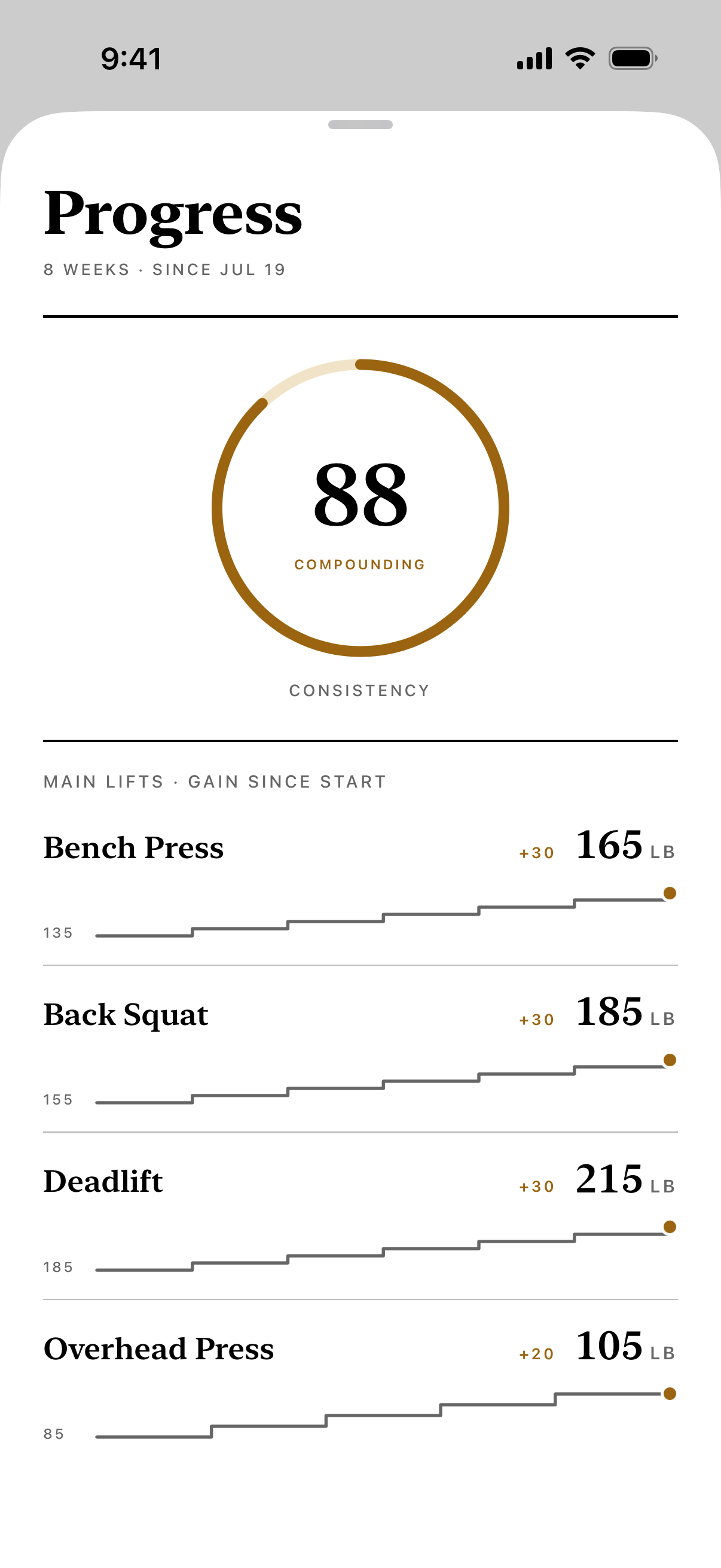
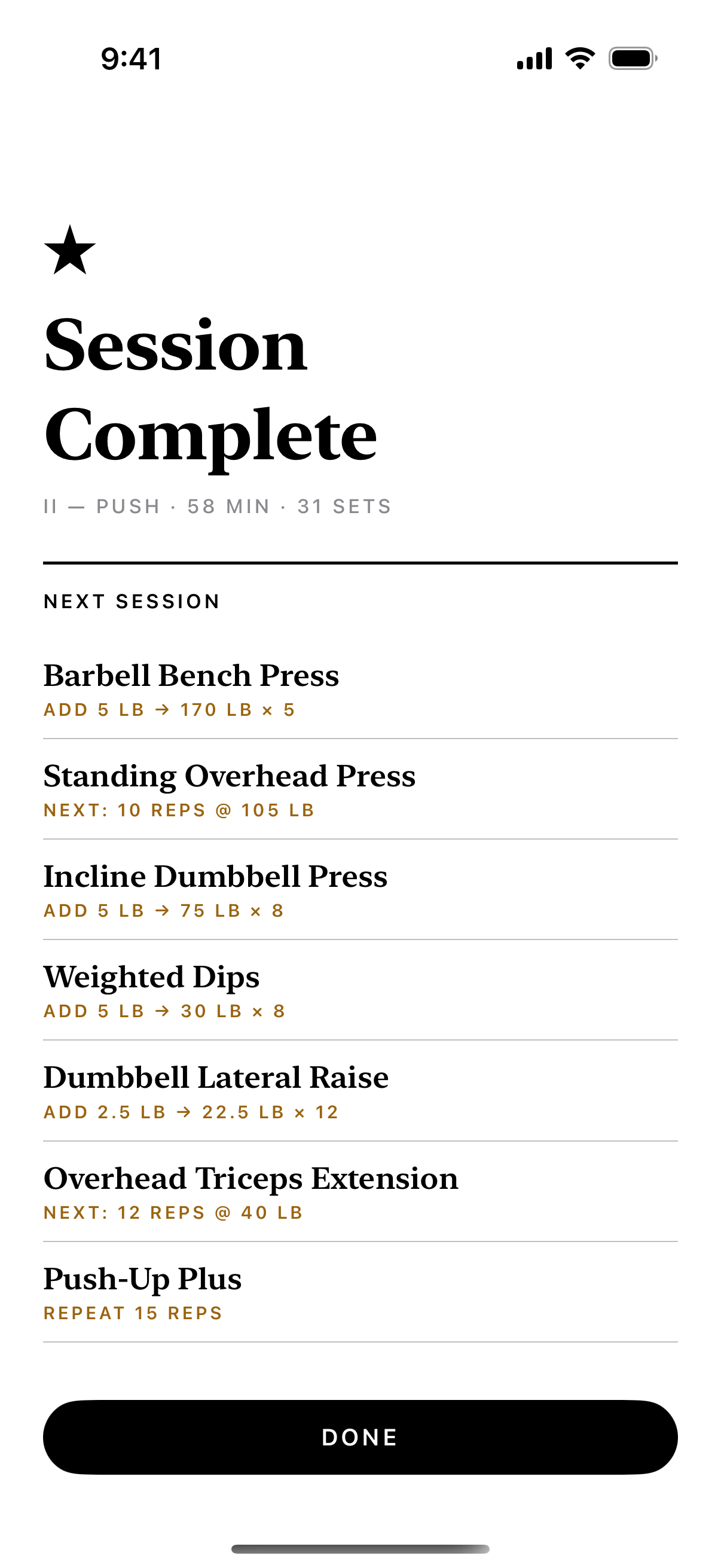
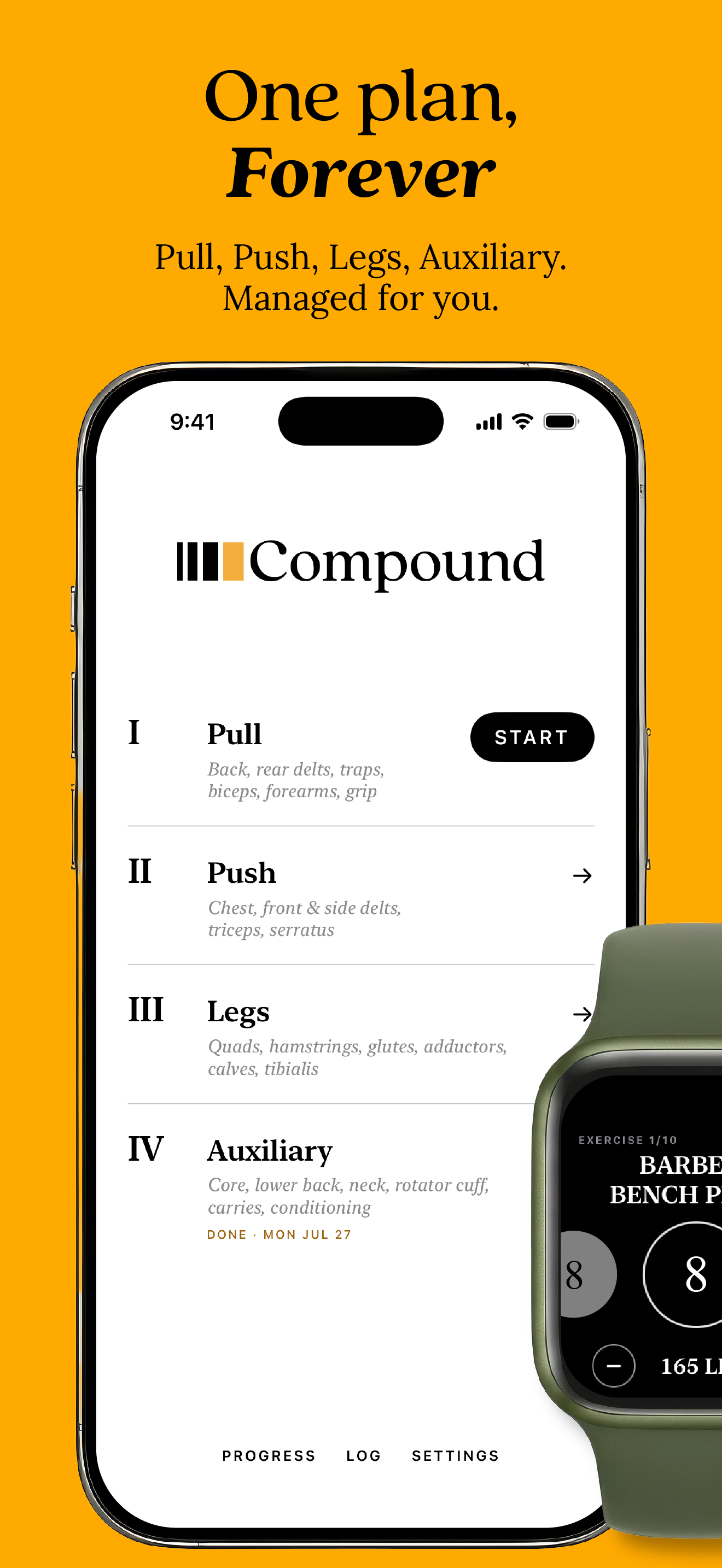
Compound is a workout app with exactly one workout in it. The program is a four-day pull, push, legs and auxiliary split built on heavy compound lifts, and it never changes: the numbers do, and the app tracks those. It decides which day is next, what goes on the bar and what the rep target is, raises the weight when it has been earned, and runs the warm-up, the rest and ten minutes of mobility around the lifts. The whole session mirrors to Apple Watch and to the Lock Screen. There is no account, no server and no feed; training history is a file on the phone. Compound is made by one person, for iPhone and Apple Watch, and costs $4.99 a month or $29.99 a year after a 14-day free trial.
Most fitness apps sell a library: thousands of exercises, hundreds of programs, endless ways to customise. Compound starts from the opposite observation. Skipping the gym rarely happens because someone ran out of exercises. It happens because they ran out of decisions: which program, which variation, how many reps was Tuesday, whether it is time to add weight. Every decision at the gym door is a chance not to go. So Compound ships one complete program and runs it, and there is nothing else in it.
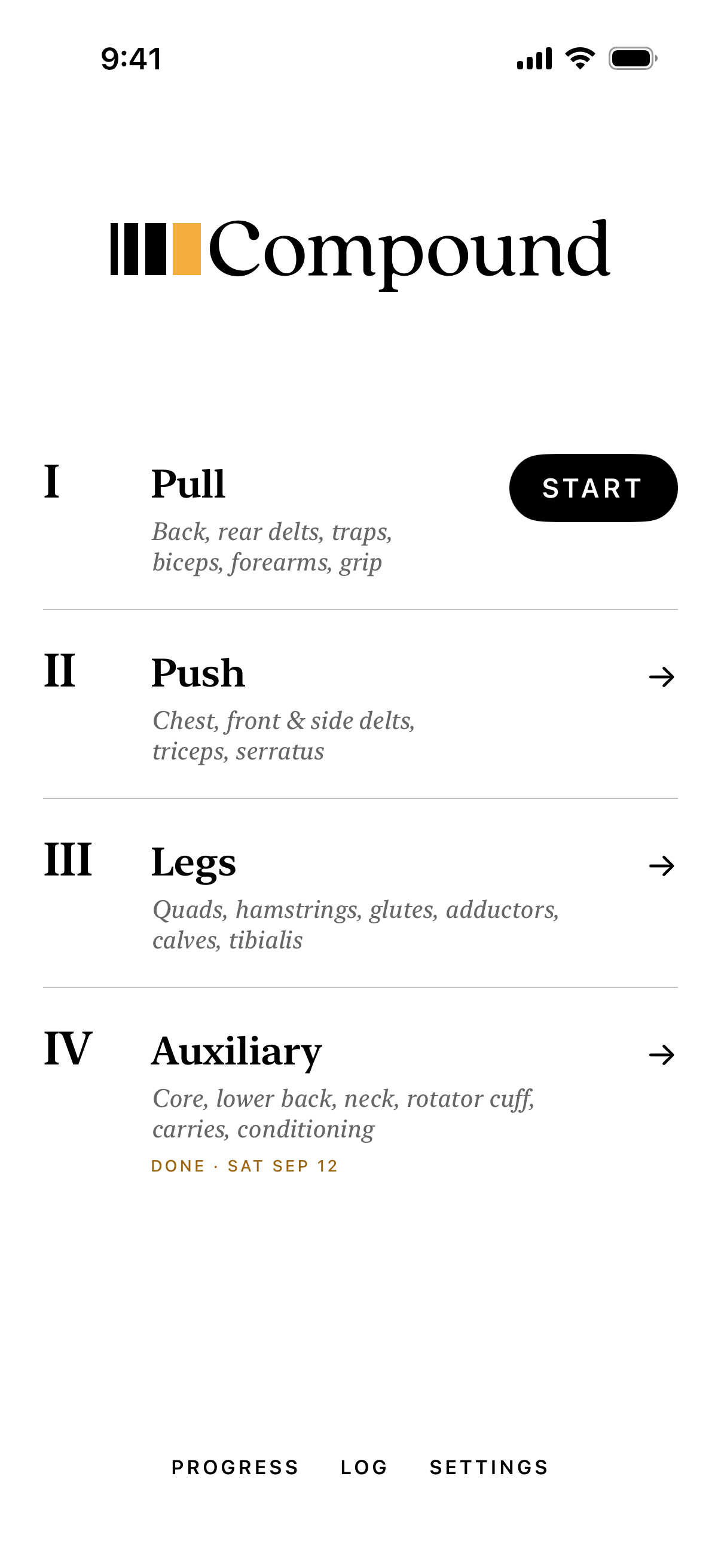
The program is a four-day split. Pull, push, legs, then an auxiliary day for the work almost every program skips: neck, tibialis, rotator cuff, serratus, adductors, forearms and grip. Thirty-one lifts in a fixed order, arranged so heavy deadlifts and heavy squats never land back to back. It doesn’t rotate and doesn’t refresh. Progressive overload is the program; the exercises stay put and the numbers move.
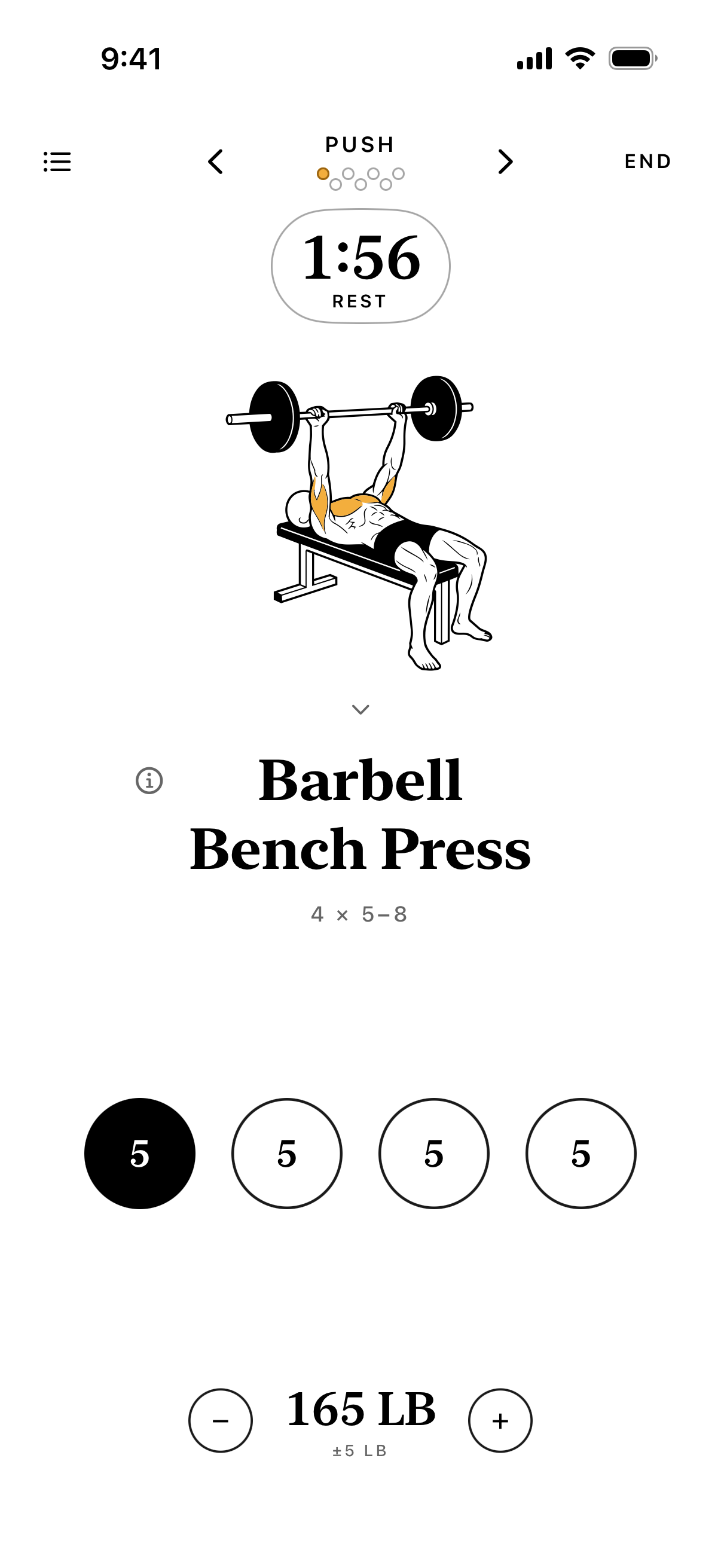
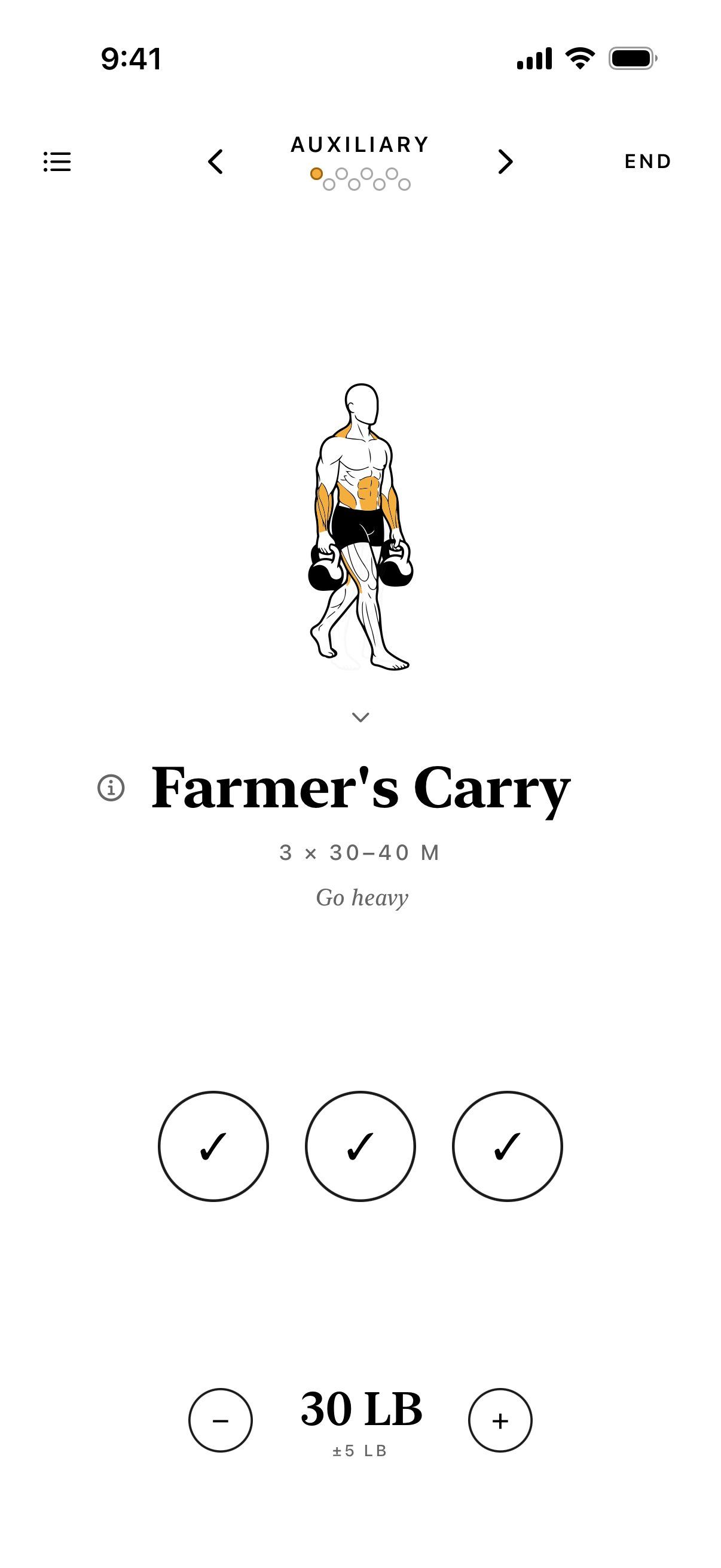
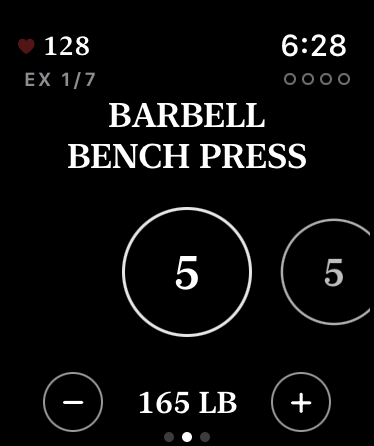
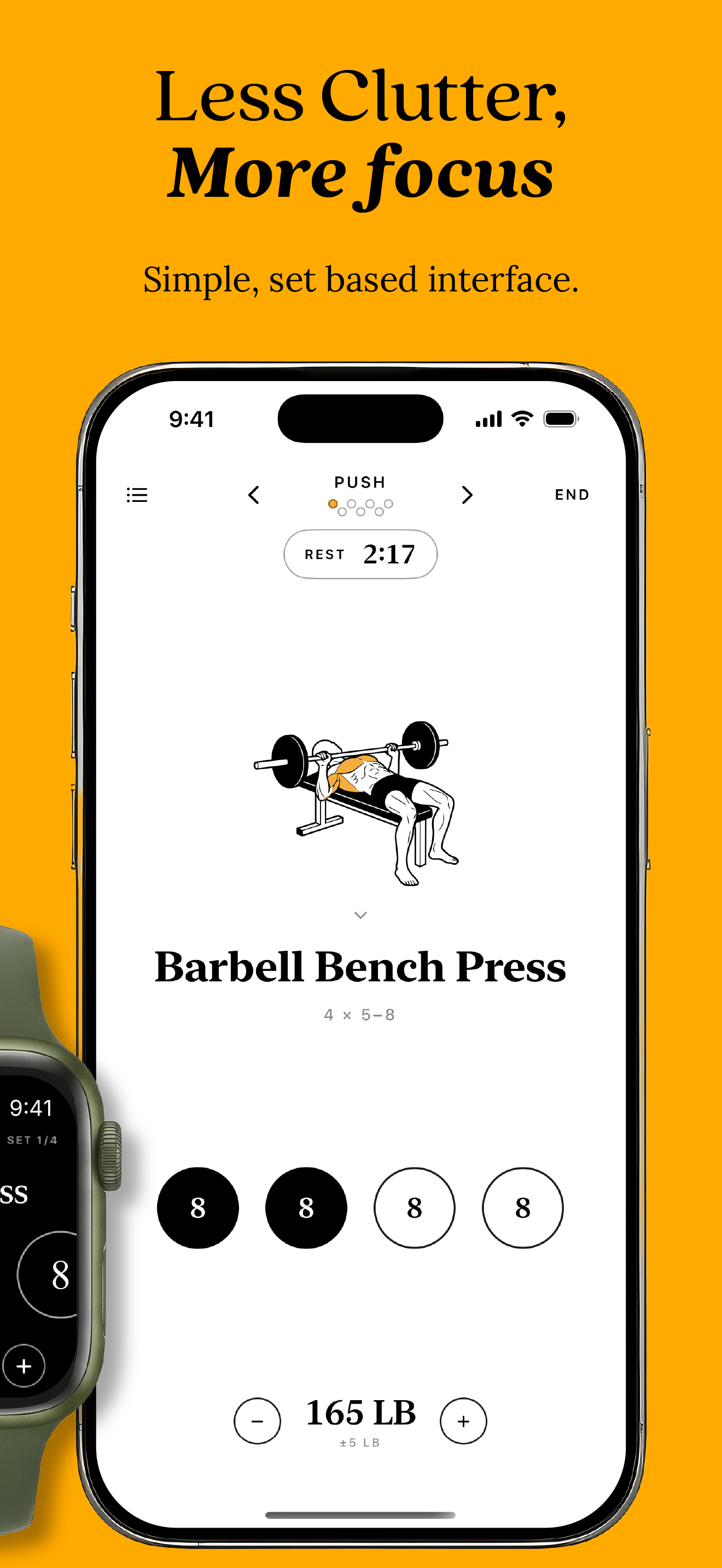
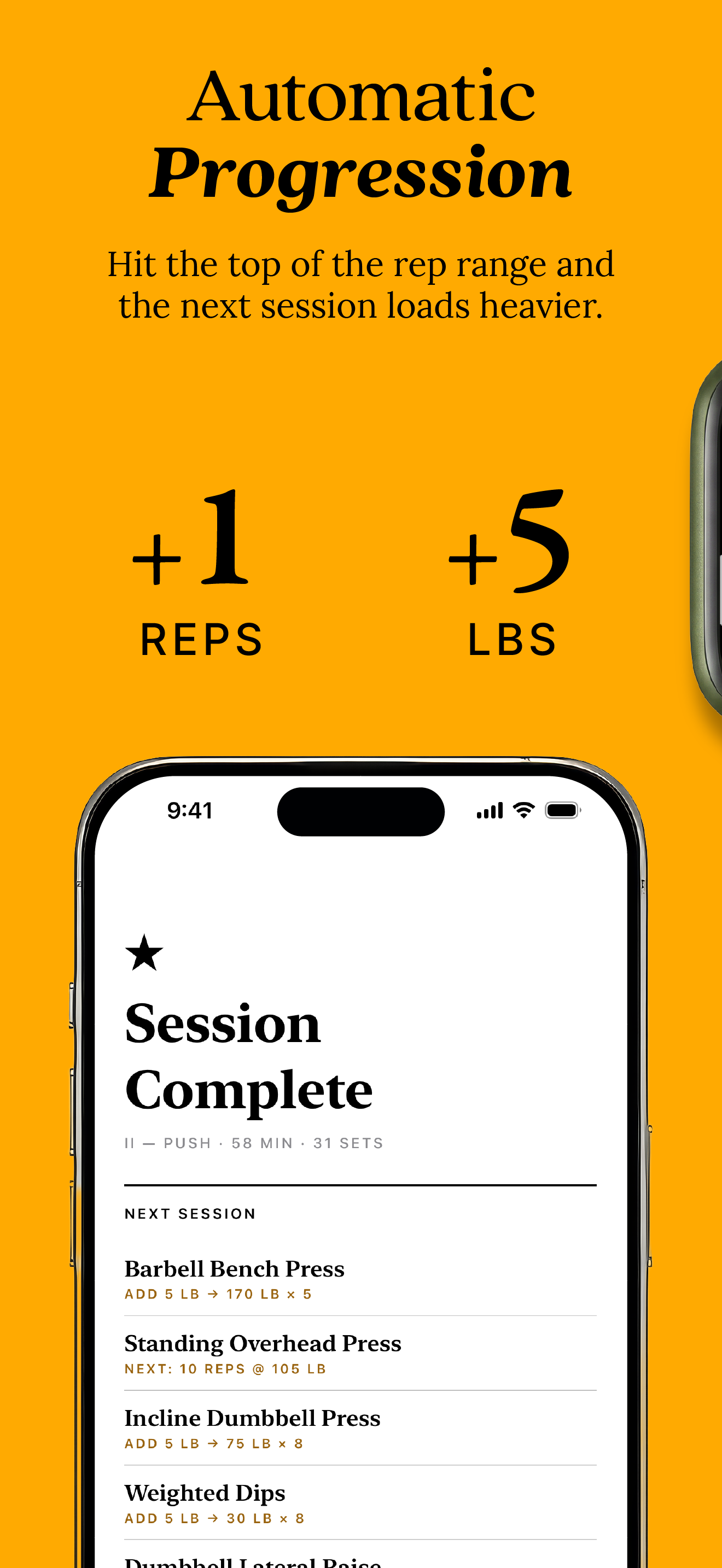
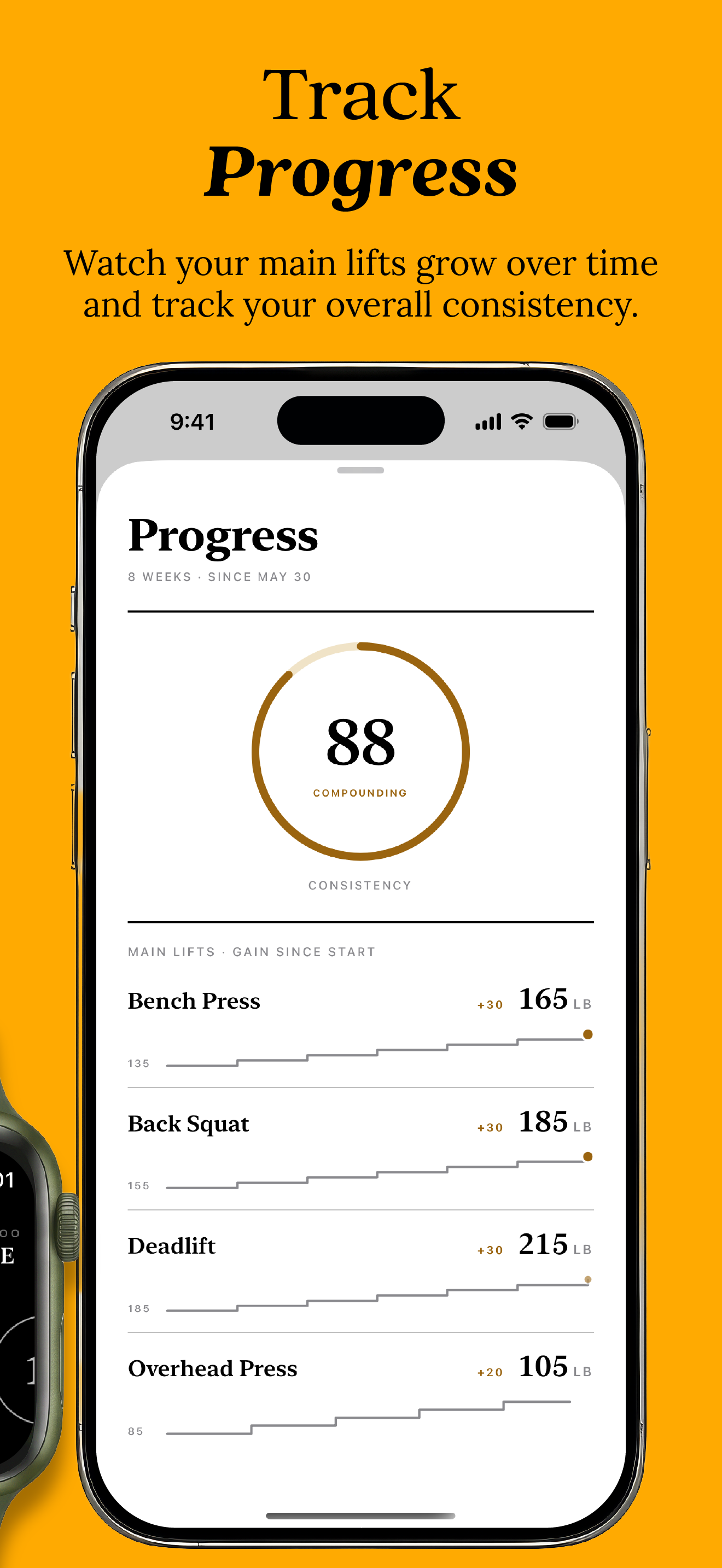
The numbers move by double progression, a method lifters have used for fifty years, and the app does the bookkeeping. Hit every set at the target and next session asks for one more rep. Reach the top of the rep range and the bar gets 5 lb heavier, 2.5 lb on isolation work, and the reps reset to the bottom. Miss a set, and the target waits. Anyone who wants a slower climb can ask for two, three, up to five successful sessions per increase. Nothing is calculated by the person lifting. They look down, tap a circle, and move on.
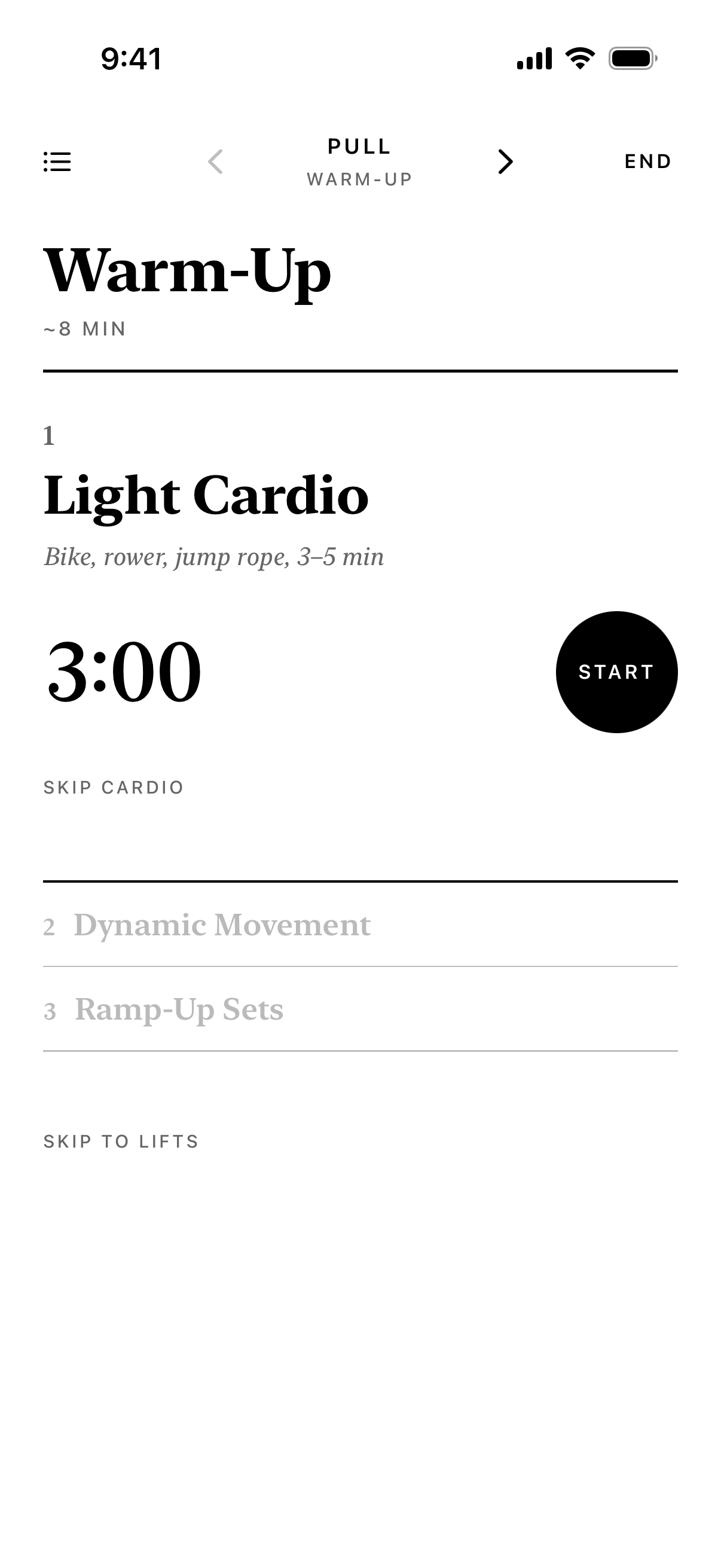
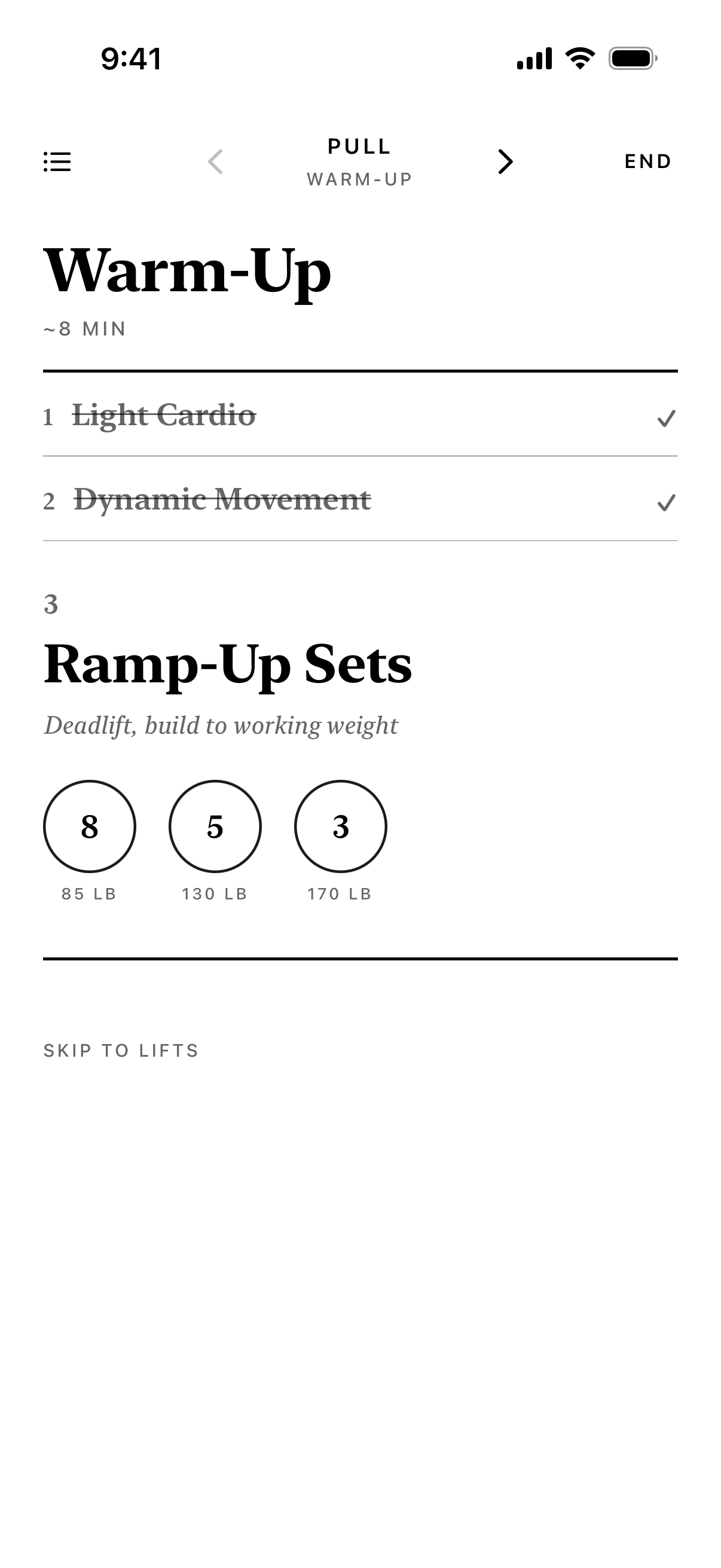
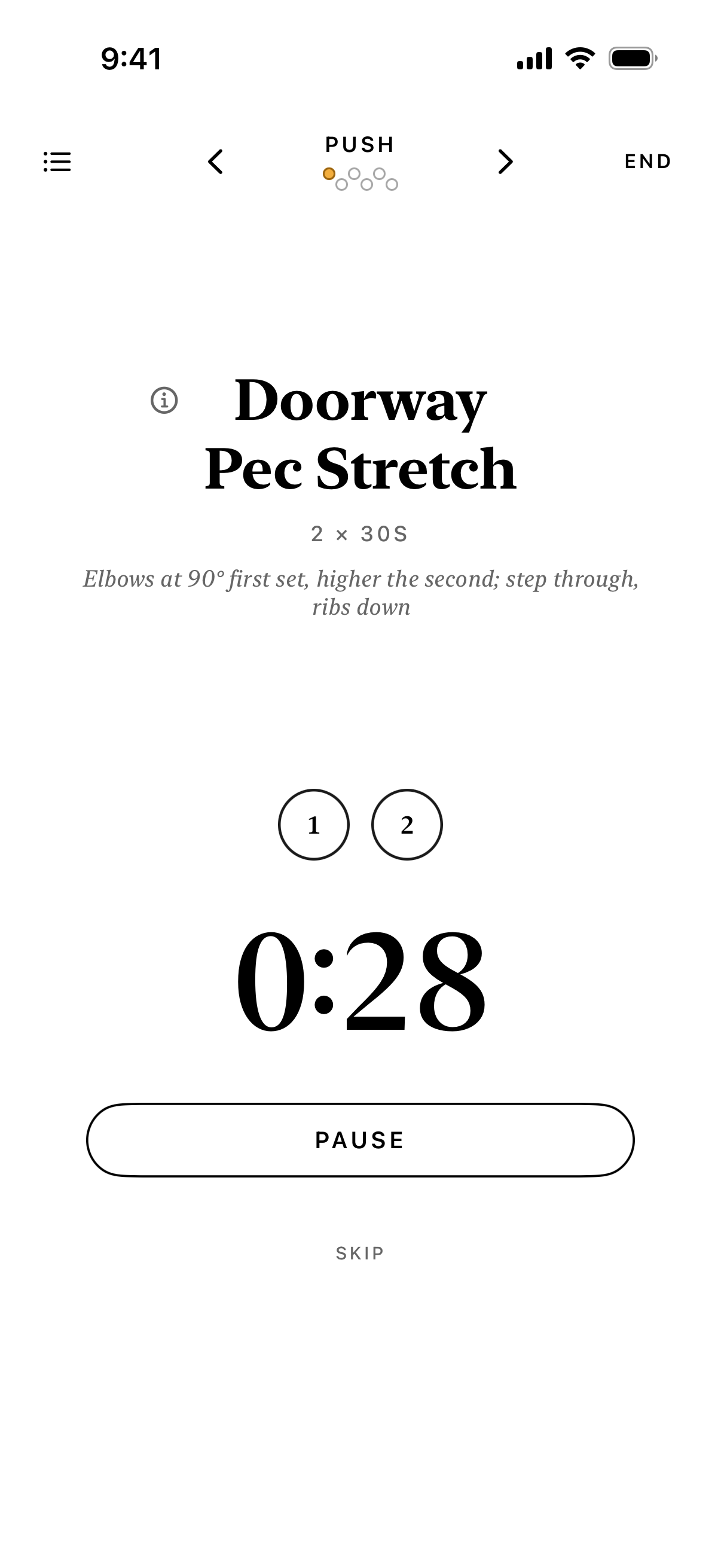
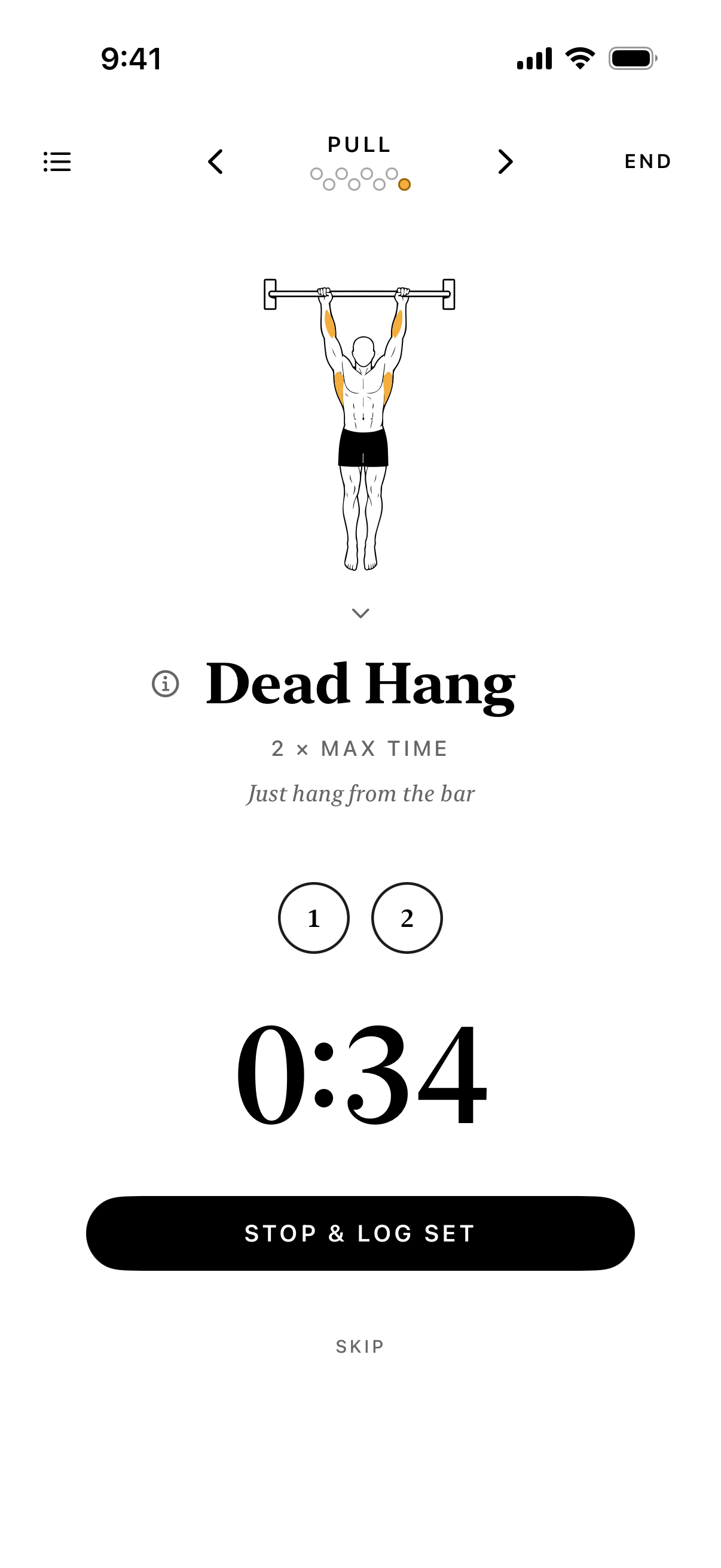
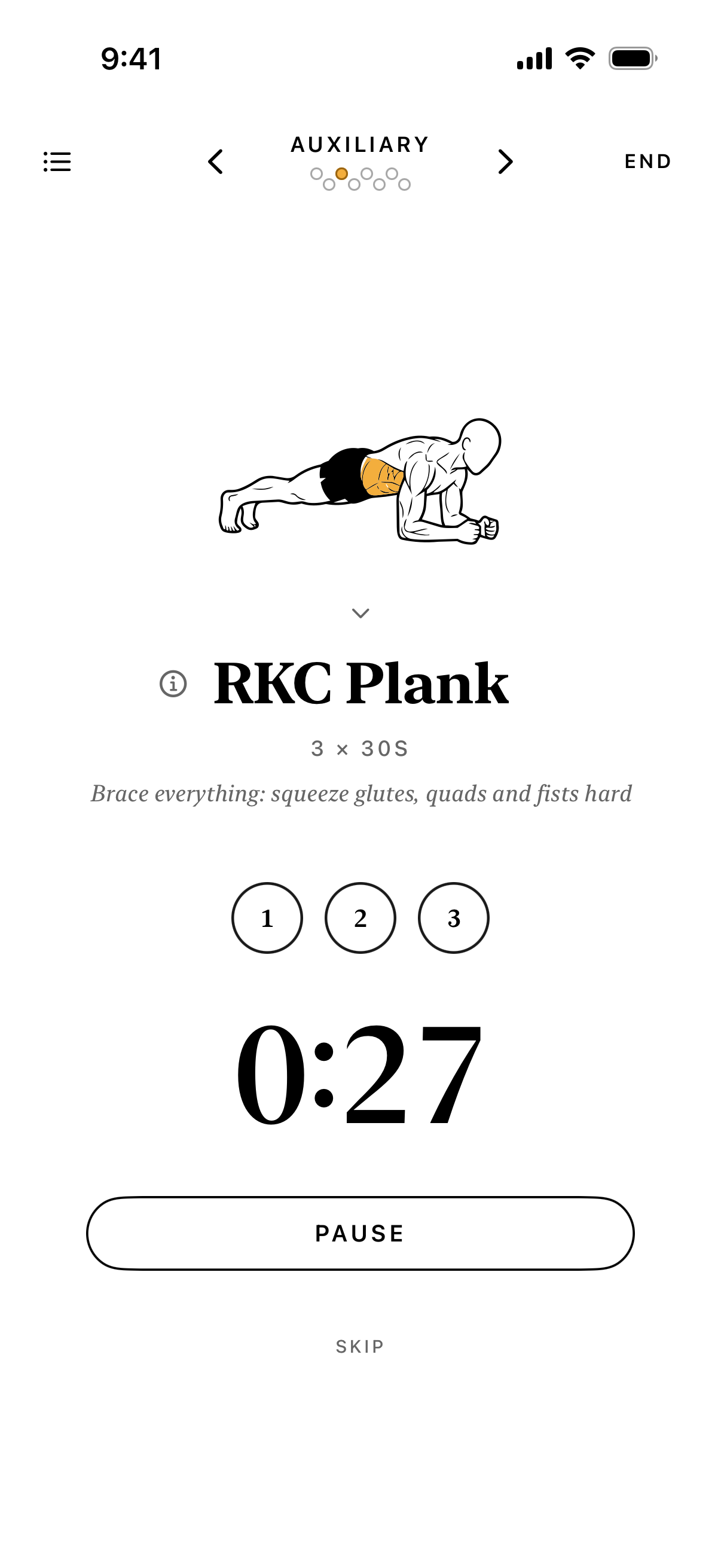
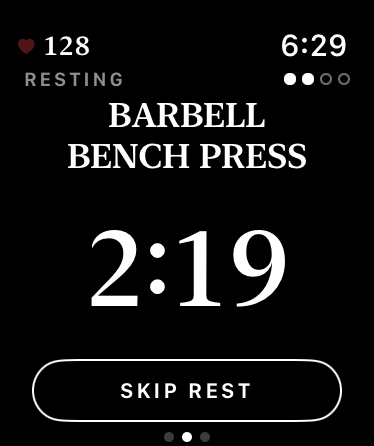
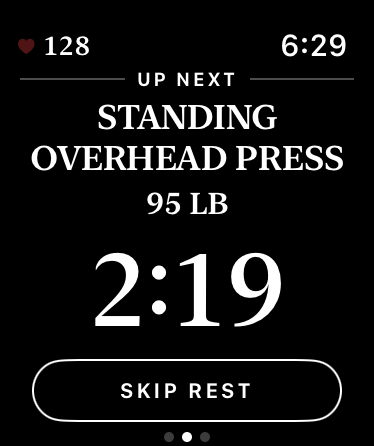
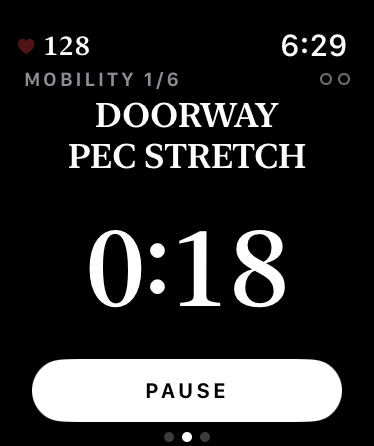
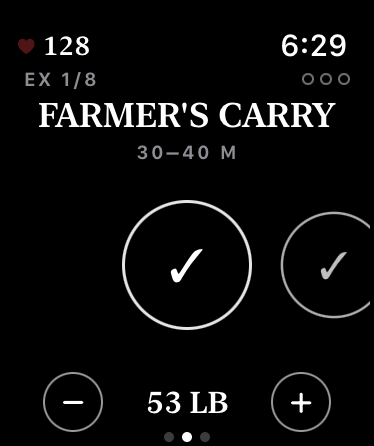
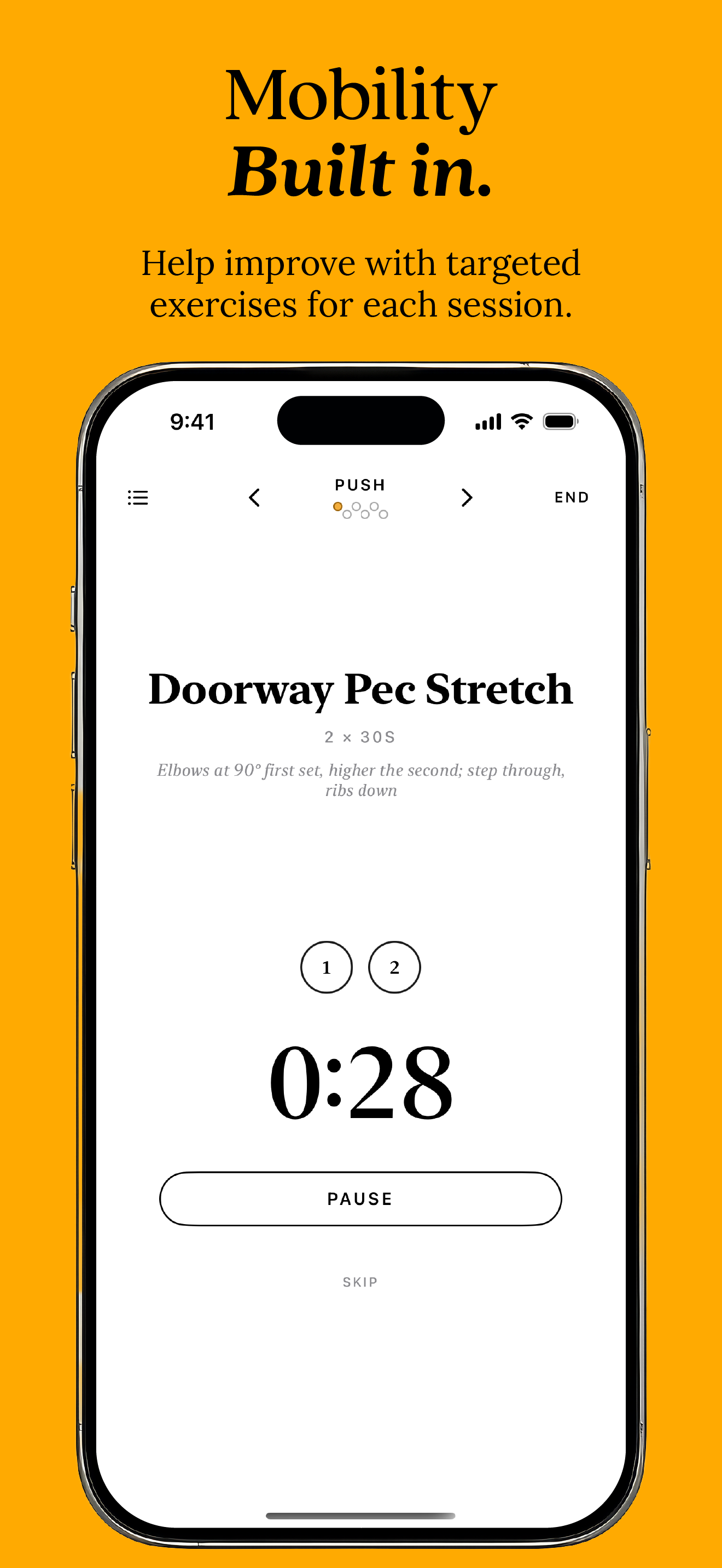
A session is more than the lifts. Every workout opens with three minutes of cardio on a clock, the day’s dynamic movements, and ramp-up sets computed from the first lift’s working weight. Rest timers start themselves the moment a set is logged: three minutes after the heavy lifts, two after the medium ones, ninety seconds after isolation work. Ten minutes of mobility closes every session. Each exercise gets the control it actually needs: circles for reps, a stopwatch for a dead hang, a countdown for a plank, distance for a carry, four labelled holds for the neck, and a drawing of the form or a link to a video of it.
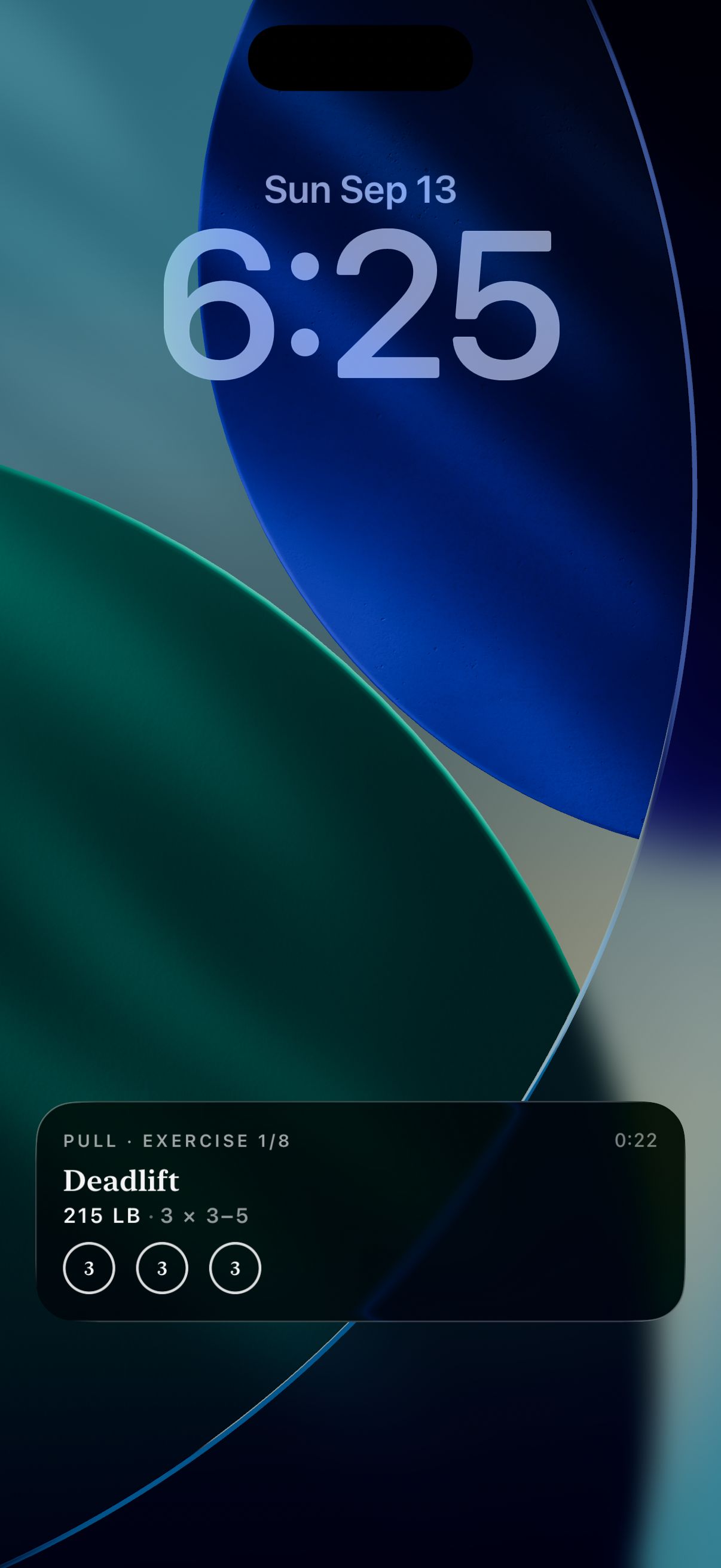
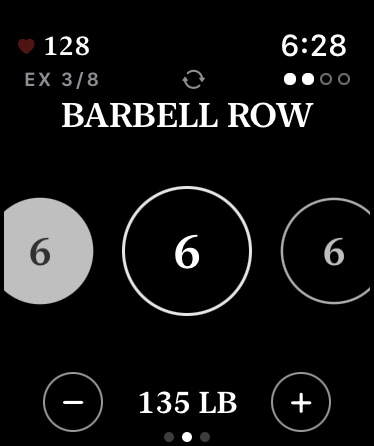
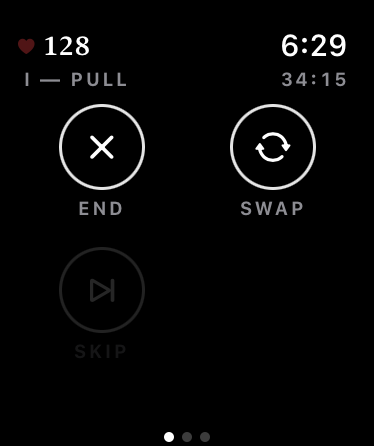
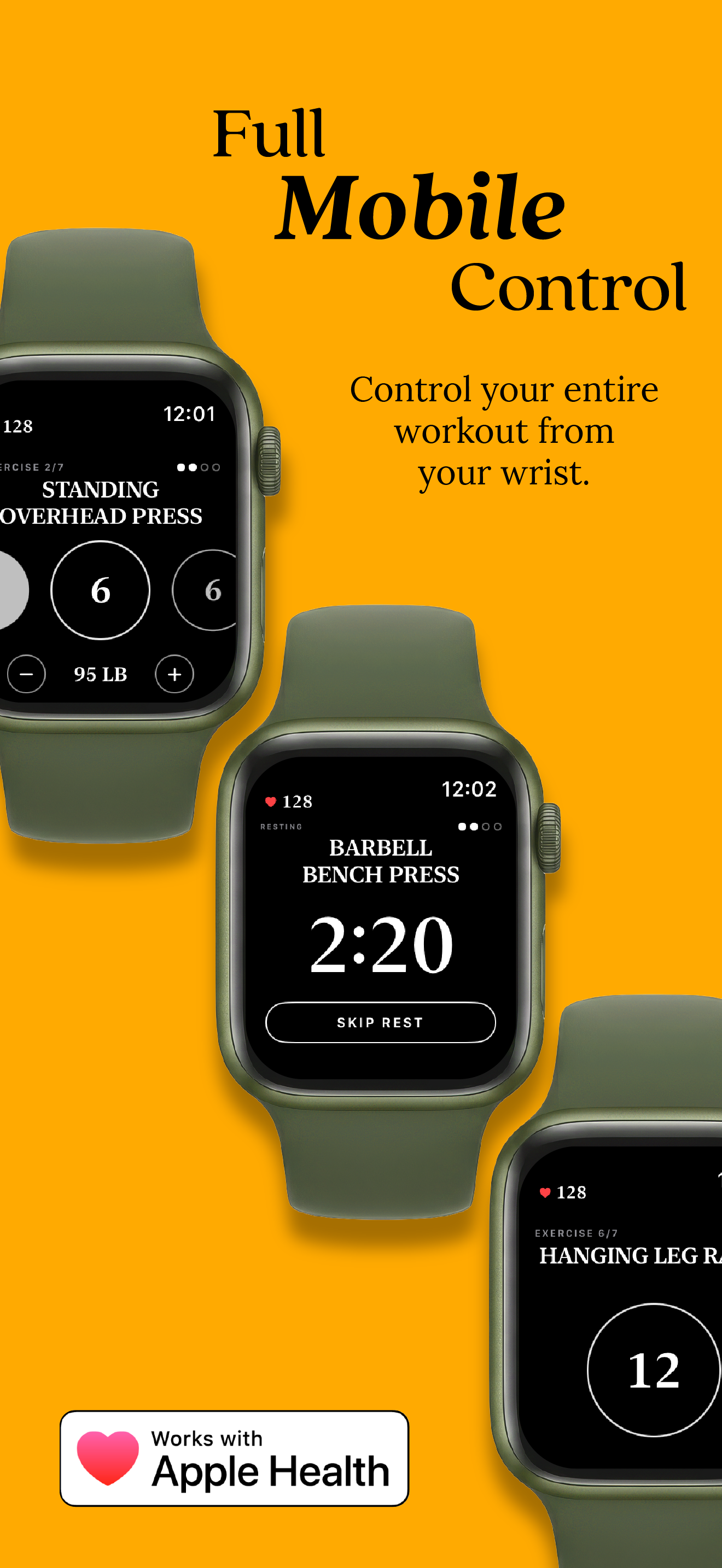
The Apple Watch app is a full companion, not a remote. Sets are logged, rests skipped, clocks run and weight adjusted from the wrist with the phone in the bag, and the Digital Crown scrolls through the whole day. The phone stays the source of truth and the watch decides nothing, so the two can never disagree. With the phone locked, the whole session lives on the Lock Screen, from the first minute of the warm-up to the last stretch, with every control. Workouts save to Apple Health, with heart rate and calories when the watch is worn.
Nothing leaves the phone. There is no account and no sign-up, no server, no analytics and no third-party code, which is why the App Store privacy label reads “Data Not Collected”. Training history is stored on the device and can be exported as a single file at any time, subscribed or not. The app works in a basement gym with no signal.
It is designed like a printed program rather than a dashboard: black ink on white paper, serif display type, hairline rules, and an amber accent that means exactly two things, that a control is under your finger or that a number grew. Compound is built, designed and supported by one person. It is on the App Store for iPhone and Apple Watch, with the first fourteen days free, then $4.99 a month or $29.99 a year.
Every number above is the app’s own. The rest tiers, increments and program are also written up, at length, in the articles.